Publication Scientific Reports

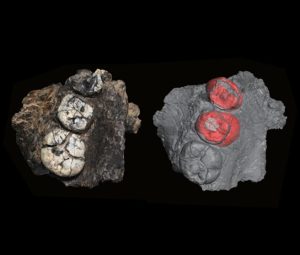
sirindhornae gen. et sp. nov. (holotype, TF 2942).
References
Chaimanee, Y., Marivaux, L., Millien, V. et al. A giant eocene ischyromyid from Southeast Asia reveals the early evolution of rodent gigantism. Sci Rep 16, 34523 (2026).
DOI: 10.1038/s41598-026-76711-6A giant eocene ischyromyid from Southeast Asia reveals the early evolution of rodent gigantism
Gigantism has evolved repeatedly in rodents, but the best-documented examples are predominantly known from Neogene caviomorphs of South America. Evidence for gigantism among early rodents is scarce, limiting our understanding of its evolutionary history. Here we describe Yakamys sirindhornae gen. et sp. nov., a giant ischyromyid from the late Eocene of the Krabi Basin, southern Thailand.
The new taxon is represented by a lower second molar and an associated lower incisor that combine exceptionally large dimensions with a distinctive suite of dental characters, including a moderately high crown, a short, isolated anteroconid, an incomplete metalophulid II, a bifid entolophid, and the absence of a mesoconid and hypoconulid. Incisor enamel exhibits a pauciserial Hunter–Schreger band pattern consistent with Ischyromyidae enamel microstructure. Body mass estimates derived from seven allometric equations range from 21.4 to 47.3 kg, with a mean of 31.6 kg and a median of 28.6 kg. We use approximately 30 kg as a rounded summary of the central tendency of these estimates, while acknowledging the substantial uncertainty associated with dental allometry.
This estimate indicates that Yakamys had a substantially greater body mass than previously described Paleogene ischyromyids. Its discovery provides evidence for exceptionally large body size in Eocene ischyromyids of Southeast Asia.It demonstrates that substantial body-size increases had occurred in an early rodent lineage by the late Eocene, well before the major diversification of giant Neogene caviomorphs in South America. This finding further highlights the importance of the Southeast Asian fossil record for understanding the early diversification and morphological evolution of rodents.
October 2026
Publication Comptes Rendus Palevol
March 8-10 2027
7th Virtual Conference for Women Archaeologists and Paleontologists
October 10-11 2026
Palevoprim invites you to l'Hôtel de ville, Poitiers
October 2026
Publication Scientific Reports
September 29-30 2026
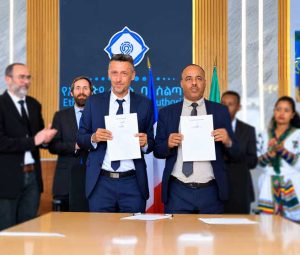
International workshop in Addis Ababa and official launch IRL PALÆTHIOPS