



Missions
Chad
Franco-Chadian Paleoanthropological Mission (MPFT)
Lake Chad Basin & Bodélé Depression (Djourab Desert),
Angamma (northern Chad)
Contact: Franck Guy

General research question
The aim is to document the earliest stages of human evolution, just after the divergence of the human and chimpanzee lineages. The MPFT also investigates the distribution of our family across Africa and its local evolution, including australopithecines, as well as the precursors and earliest representatives of the genus Homo.
Selected results
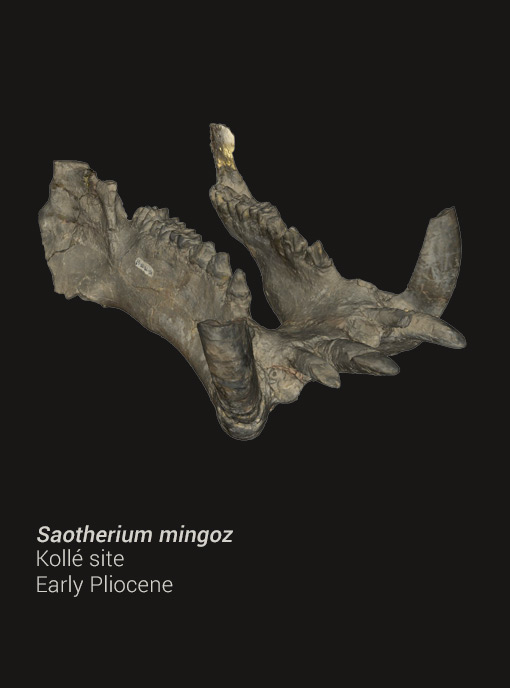
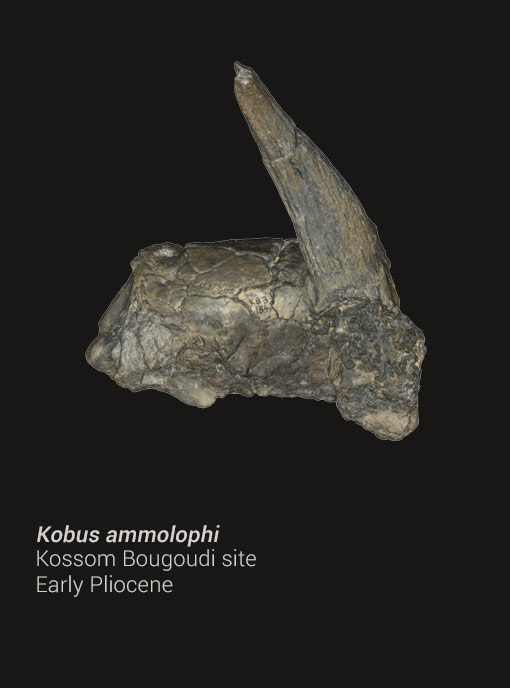
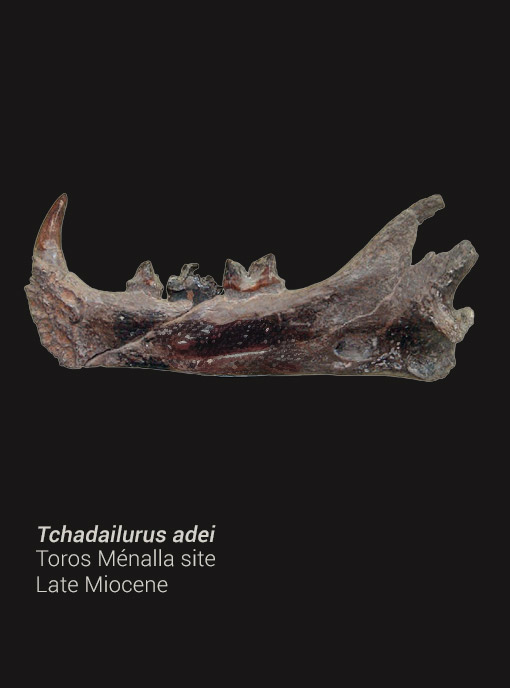
The MPFT has discovered more than 500 fossil vertebrate sites dating from the Mio-Pliocene to the Pleistocene in Chad, yielding more than 20,000 fossil vertebrate remains. It uncovered the first known australopithecines west of the East African Rift (Australopithecus bahrelghazali) and the oldest currently known representatives of the human lineage (Sahelanthropus tchadensis). The mission also documents the region’s environmental history. Taken together, these recent discoveries in Central Africa are leading to a radical reassessment of our understanding of the emergence and earliest stages of human evolution.
Mission structure
The MPFT is a multidisciplinary research mission (palaeontology, geology and palaeoenvironments) led by PALEVOPRIM and the Collège de France, in close partnership with the University of N’Djamena and the National Center for Research and Development in N’Djamena. It operates under an agreement between these institutions and the University of Poitiers. The MPFT brings together around 100 researchers from approximately ten nationalities.
Funding
The MPFT has notably benefited from the support of:
- the CNRS, the French National Research Agency (ANR), the French Ministry for Europe and Foreign Affairs (Archaeological Excavations Commission, Paris, and the Cooperation and Cultural Action Department [SCAC] of the French Embassy in N’Djamena), the Nouvelle-Aquitaine Region (formerly Poitou-Charentes), the Vienne Department, and the Elf Group (Total).
- unwavering administrative and logistical support from the Presidency of the Republic of Chad, the CNRD (formerly CNAR), and the Department of Palaeontology at the University of N’Djaména.
Chad
Fossil prospecting
in the Chadian desert
Chad
Identification of a fossil
Chad
Franco-Chadian
Paleoanthropological Expedition
Chad
Camp of the Franco-Chadian
Paleoanthropological Mission


