



Missions
Vietnam
Franco-Vietnamese Paleontological Mission
Cenozoic basins of Northern Vietnam
Contact: Olivier Chavasseau
General research question
The main objective of this mission is to gain a better understanding of the paleobiodiversity and evolution of mammalian faunas in the Cenozoic of Southeast Asia by providing new data from the continental basins of Vietnam.
Selected results
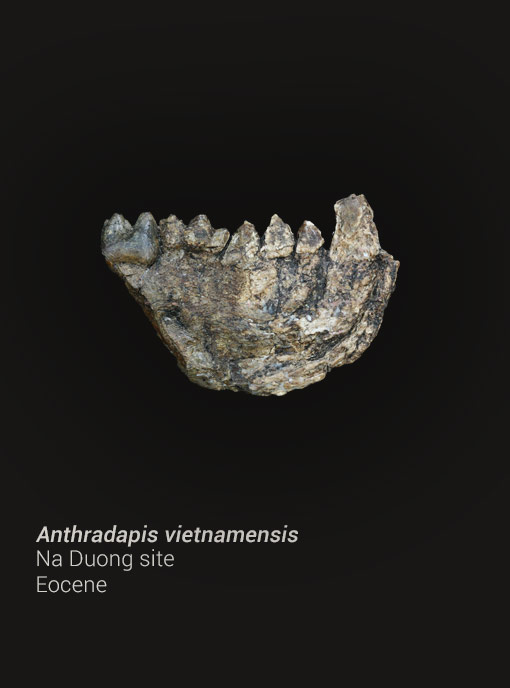
This mission has provided new data on the Na Duong Basin. Three new species of anthracothere mammals (a group closely related to hippopotamuses) have been described there. These discoveries have made it possible to refine the biochronological age of the site, dating it to between the early and middle late Eocene (ca. 38–36 Ma), documenting a previously undocumented time interval in Southeast Asia. They have also demonstrated the existence of significant faunal exchanges during the middle/late Eocene within Southeast Asia and South China, as well as with Africa.
Mission structure
This mission has involved members of the PALEVOPRIM laboratory and the Institute of Marine Geology and Geophysics (IMGG) in Hanoi, part of the Vietnam Academy of Science and Technology (VAST), since 2012.
Funding
The Franco-Vietnamese Paleontological Mission benefited from the support of the CNRS through the 2015–2017 PICS project “Paleontology of the continental Tertiary basins of Vietnam: biodiversity, mammalian evolution and tectonic implications.”
Vietnam
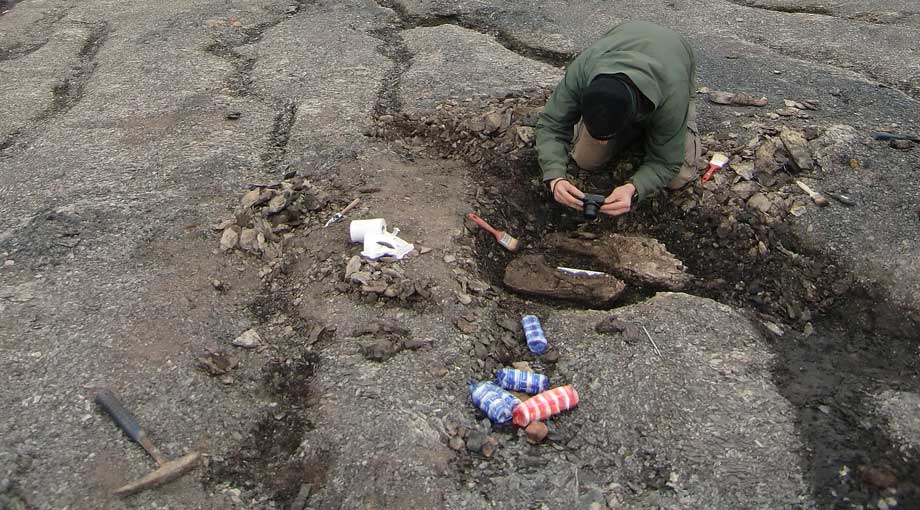
Prospecting in the quarry.
Vietnam
Identification of a fossil.
Vietnam
Excavated fossil.


