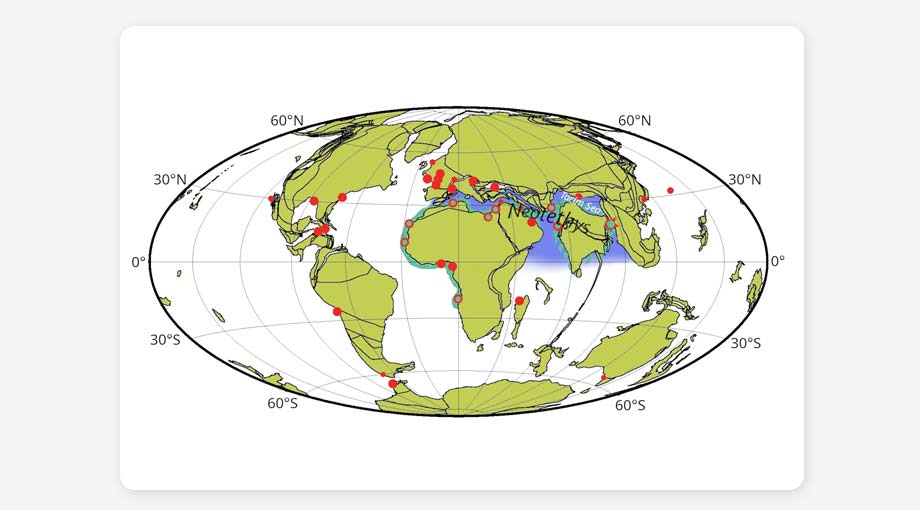
Fig. 5. Neothethys map during
the Late Eocene.

References

Adnet, S., Valentin, X., Chaimanee, Y., Soe, A. N., Sein, C., & Jaeger, J. J. (2026). Upper Eocene elasmobranch assemblages from Myanmar: Evidence for the easternmost dispersal pathways across the Neotethys. Palaeoworld, 201169.

DOI : 10.1016/j.palwor.2026.201169

Upper Eocene elasmobranch assemblages from Myanmar: Evidence for the easternmost dispersal pathways across the Neotethys

The Eocene record of elasmobranchs in the eastern Neotethys (Indo-Pacific area) remains notably sparse, especially when compared to that of its western counterpart, which borders North America, Europe, and North Africa.

This study provides the second comprehensive account of middle–late Eocene elasmobranch assemblages from Myanmar and documents the presence of seven Carcharhiniforms and Batoids, including a newly identified fossil species of carcharhinid. The faunal composition, dominated by euryhaline or freshwater-tolerant taxa such as Dasyatidae, Pristidae, and Odontorhytis pappenheimi, strongly indicates a depositional environment influenced by brackish water or substantial freshwater input, consistent with sedimentological evidence and observations from contemporary sites in North Africa.

The occurrence of these taxa in Myanmar represents the easternmost record of several late Eocene elasmobranchs, emphasizing ancient dispersal routes along the tropical Atlantic and Neotethys coasts.

This modest assemblage highlights the potential for greater elasmobranch diversity in the dynamic Neotethys during the Paleogene than is currently recognized and may signal early shifts of biodiversity hotspots towards the Indo-Pacific.

August 2026

Publication American Journal of Biological Anthropology

Scroll to Top