International seminar n° 84 Melvin Vankelst
Speaker
Abel Moclán Ramos
Postdoctoral Researcher Fyssen Foundation grant, PALEVOPRIM
Taphonomy at the Pinilla del Valle Sites: How taphonomic analysis helps us understand hominin behavior
Traditionally, Taphonomy in archaeological contexts has been used to analyse how hominins accessed to animal carcasses (primary vs. secondary) and to assess the degree of alteration in faunal assemblages. However, in recent years, the scope of taphonomic research has expanded, addressing new questions such as the level of competition between hominins and carnivores or even symbolic issues.
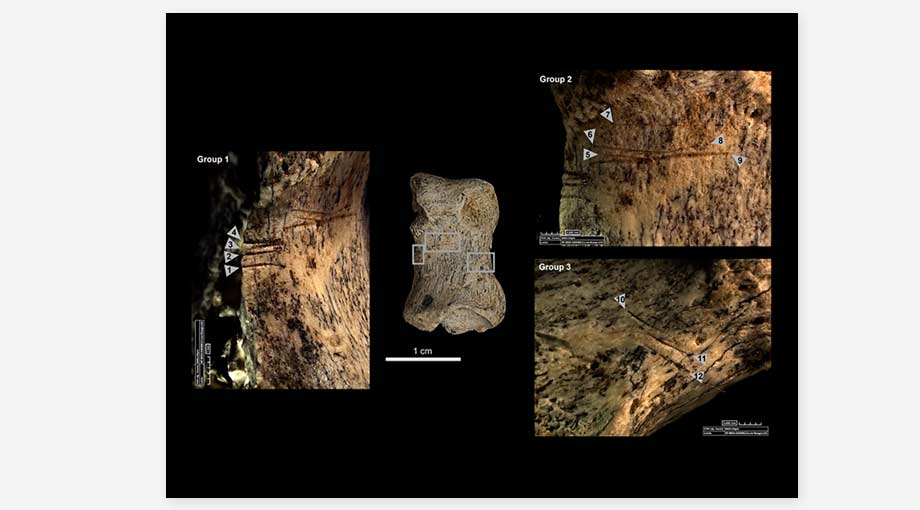
The archaeological area of Calvero de la Higuera in Pinilla del Valle (Spain) is one of the best European examples demonstrating the significance of taphonomy in resolving various archaeological issues. In these karstic sites, which span from the Middle Pleistocene to the Holocene, taphonomic studies have identified hyena dens with sporadic Neanderthal presence, water-reworked assemblages, a short-term Neanderthal hunting camp, and the only known Neanderthal faunal accumulation that is entirely symbolic rather than subsistence-related.
In this talk, we will delve into which taphonomic variables are most relevant in archaeological contexts and how they influence the interpretation of the assemblages from Pinilla del Valle sites.
Place
- Room 410, 3rd floor, North wing, Build. B35, university of Poitiers.
September 17-19, 2026
ESHE 2026 Meeting, Burgos
September 2026
Publication Palaeoworld
September 2026
Publication Comptes Rendus Palevol
August 2026
Publication American Journal of Biological Anthropology
August 2026
Publication Journal of Human Evolution