Speaker

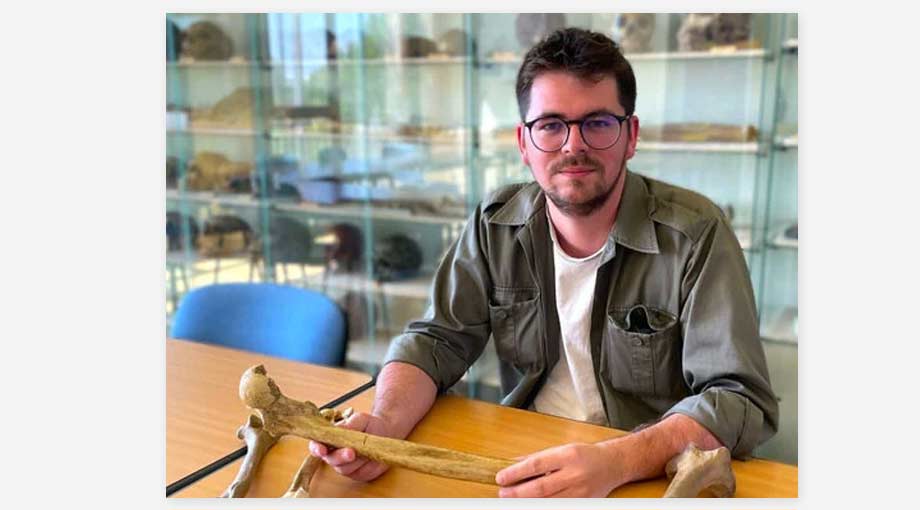
Quentin Cosnefroy

Postdoctoral fellow, UMR 5199 PACEA, University of Bordeaux – CNRS

The Internal Structure of Long Bones: Between Locomotor Adaptation and Phylogenetic Signal

The internal morphology of long bones, in other words their structure, is a key tool in paleoanthropology for reconstructing postural and locomotor behaviors. This field of research is particularly central to the study of fossil hominins, notably for understanding the emergence of bipedalism as the dominant locomotor mode that characterizes them among primates.

Yet the interspecific diversity and intraspecific variability of long bone structural properties remain poorly understood, particularly in a fossil record that is often fragmentary. In the lower limb, this diversity appears to reflect both functional adaptations to the biomechanics of bipedal walking and running, influenced by mobility level and terrain variation, and intrinsic factors such as overall robusticity or body proportions. Recent studies show that certain structural properties of long bones also carry a phylogenetic signal. This raises the question of the balance between functional adaptation and phylogenetic constraints in shaping bone structure.

In this presentation, we will explore, through various examples, the diversity of structural properties of the appendicular skeleton in extant primates and fossil hominins. We will see what these properties reveal about both the morphological similarities between species with distinct locomotor behaviors and the differences between species that share the same behaviors. Finally, we will address intraspecific variability in the fossil postcranial skeleton, using the Neandertals as an example.

Place

  • Room 410, 3rd floor, North wing, Build. B35, University of Poitiers.

March 8-10 2027

7th Virtual Conference for Women Archaeologists and Paleontologists

Scroll to Top