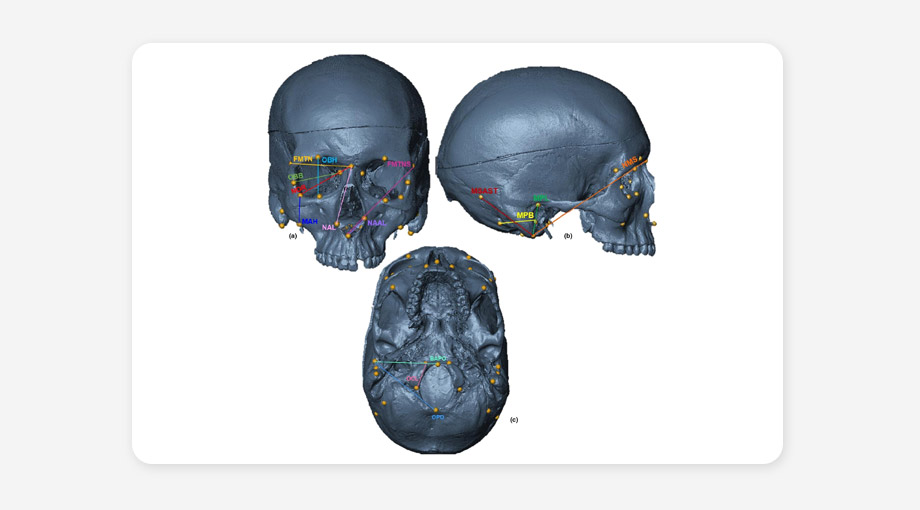
Fig. 1. Landmarks (1–34) placed on the cranium
with the inter-landmark distances (ILD) taken.

References

Harripershad, M., Liebenberg, L., Ridel, A. F., & Theye, C. E. (2025). Exploring craniofacial fluctuating asymmetry in a South African sample. Journal of Anatomy, 247(2), 314-334.

hal-05076918
DOI: 10.1111/joa.14256

Exploring craniofacial fluctuating asymmetry in a South African sample

Biological anthropologists have extensively investigated the relationship between fluctuating asymmetry (FA) and its association with population history and health. However, in South Africa, few studies have been done on skeletal asymmetry and its potential impact on anthropological analyses.

The study aimed to examine craniofacial asymmetry within a contemporary South African population, specifically focusing on the association between FA, sex, and population affinity. The sample consisted of cranial micro-focus X-ray computed tomography scans (micro-XCT) from 115 adult individuals. Craniometric landmarks were placed and used to calculate inter-landmark distances (ILDs) to assess size variation, and geometric morphometric methods (GMMs) were performed to assess asymmetrical shape variation. Additionally, two indices assessing FA (FA8 and FA17) were calculated from the left and right ILDs to further explore patterns of asymmetry for various regions of the cranium.

Asymmetry was particularly apparent in females and black South Africans, which is consistent with reports in the literature. Significant levels of FA were noted in the nasal and temporal regions, more so for shape than size.

While asymmetry potentially may have a minimal influence on biological profile estimations based on craniometry, biological anthropologists should have an understanding of the consequences asymmetry may have on skeletal elements or traits being employed on an individual basis.

March 8-10 2027

7th Virtual Conference for Women Archaeologists and Paleontologists

Scroll to Top