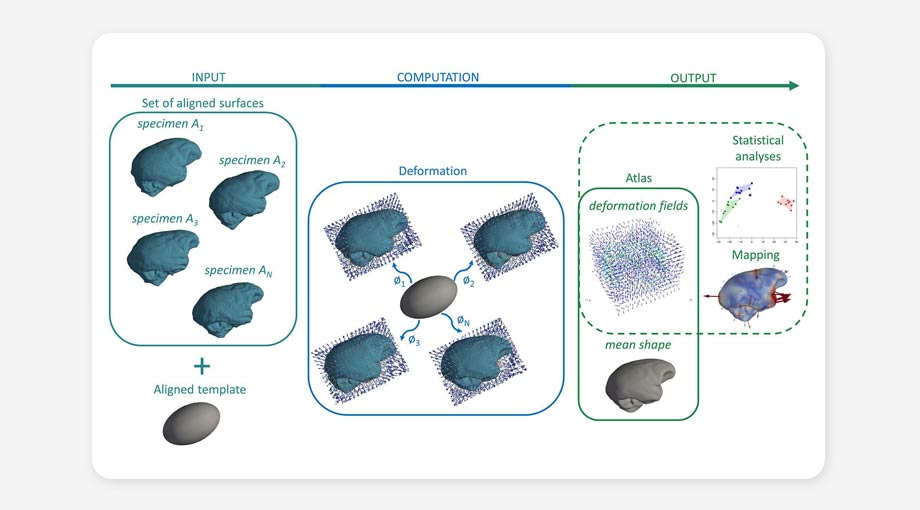
Fig. 1. Protocol showing the successive steps
of the landmark-free surface-based comparison
approach using Deformetrica

References

Beaudet, A. (2025). Investigating the primate fossil record using diffeomorphic deformation: what have we learnt?. Bulletins et mémoires de la Société d’Anthropologie de Paris. BMSAP, 37(37 (1)).

hal-05076881
DOI : 10.4000/13pt4

Investigating the primate fossil record using diffeomorphic deformation: what have we learnt?

One of the most challenging tasks in palaeontology is to identify the nature of the morphological variation observed in the fossil record.

Accurately and quantitatively investigating morphological variation in fossil assemblages requires appropriate analytical methods. Through the use of imaging techniques, 3D digital twins of existing objects have opened up the possibility of developing innovative protocols for in silico analyses of variation patterns in fossil primate bones and teeth. Landmark-based geometric morphometrics initiated a critical methodological shift in the discipline, leading to significant discoveries in palaeontology. However, in some cases (e.g., smooth and complex structures, discrete traits) landmark-based geometric morphometrics fail to fully capture differences in shape.

One possible alternative is a landmark-free diffeomorphic deformation approach based on correspondences between surfaces.

Since the first application of diffeomorphic deformation in biological anthropology a decade ago, this method has successfully revealed previously unknown details of the skeletal anatomy of fossil primates, opening up promising avenues for further investigation.

March 8-10 2027

7th Virtual Conference for Women Archaeologists and Paleontologists

Scroll to Top