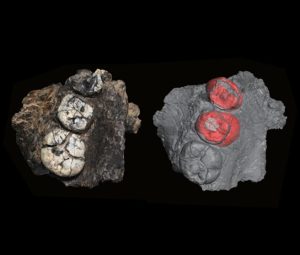
Publication Comptes Rendus Palevol

Speaker
Jeremy Duveau
Postdoctoral fellow, Eberhard-Karls-Universität Tübingen, Senckenberg Center for Human Evolution and Paleoecology Paläoanthropologie
From Footprints to Hominin Characteristics: Development and Applications of a Morphometric and Experimental Approach
Our knowledge of the evolution and diversity of hominins, whether biological, behavioral, or cultural, comes mainly from the study of skeletal remains of fossil taxa, archaeological artifacts, or associated archaeozoological and archaeobotanical remains. For the past twenty years or so, another type of evidence has been increasingly studied: footprints. These footprints open a window onto brief moments of life in the past, comparable to snapshots.
This particular timescale is inaccessible through other types of evidence and provides several original insights. Footprints thus directly reflect the locomotor behavior and foot anatomy of individuals, as well as the composition and behavior of the groups that left them. Although footprints provide information complementary to skeletal remains and archaeological artifacts, helping to refine our understanding of human evolution, studying them is far from easy. First, footprints are relatively rare in the fossil record, despite a significant increase in the number of discoveries over the past decade, and they are difficult to assign to species defined on the basis of anatomical characteristics. Moreover, the morphology of these traces results not only from foot anatomy or the individual’s biomechanics, but also from the nature of the substrate (grain size, mineralogy, moisture) and the many taphonomic processes that may come into play.
After introducing the history, relevance, and limitations of footprint studies in paleoanthropology, this presentation will focus on the paleobiological and locomotor interpretations that can be drawn from footprints using a morphometric and experimental approach.
The presentation of the Spanish site of Matalascañas (Middle Pleistocene) and the Moroccan site of Larache (Late Pleistocene) will illustrate the applications of this approach.
PLace
- Room 410, 3rd floor, North wing, Build. B35, University of Poitiers.
March 8-10 2027
7th Virtual Conference for Women Archaeologists and Paleontologists

October 10-11 2026
Palevoprim invites you to l'Hôtel de ville, Poitiers
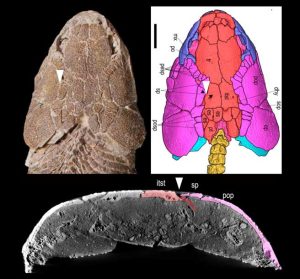
October 2026
Publication Scientific Reports
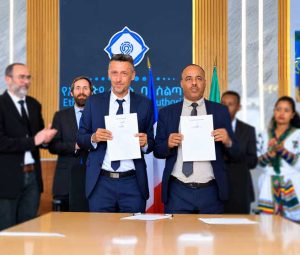
September 29-30 2026
International workshop in Addis Ababa and official launch IRL PALÆTHIOPS

September 25 2026
Night of research in New Aquitaine, Poitiers