International seminar n° 85 Luc Doyon

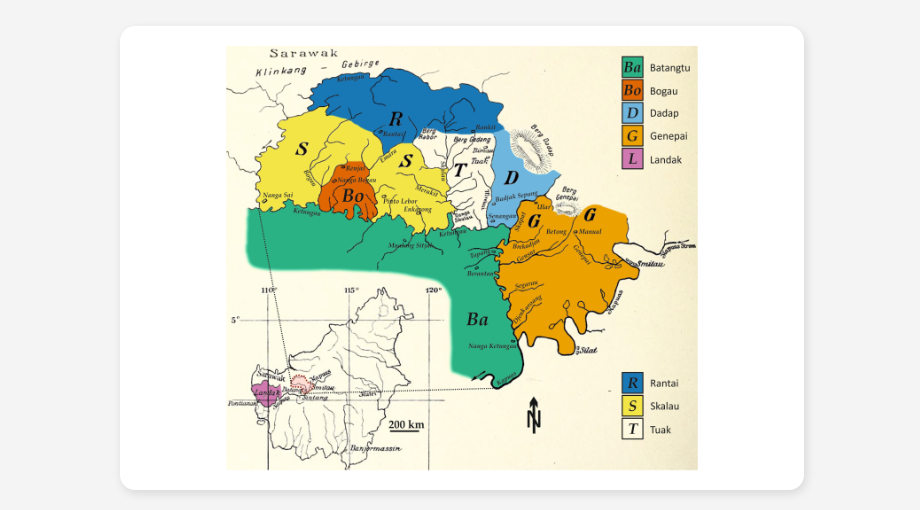
of the Borneo orangutan (Pongo pygmaeus)
specimens from the Selenka collection
(after Selenka 1898).
Références
Habinger, S. G., Merceron, G., van Heteren, A. H., Cuyutupa, V. R., Bocherens, H., & Chavasseau, O. (2026). Dental Microwear Texture Analysis of the Bornean Orangutans (Pongo pygmaeus) From the Selenka Collection. American Journal of Biological Anthropology, 190(1), e70266. DOI: 10.1002/ajpa.70266
Dental Microwear Texture Analysis of the Bornean Orangutans (Pongo pygmaeus) From the Selenka Collection
Objectives
Characterizing the diet of extant taxa is important not only to determine their ecological niche but also to serve as a reference for dietary and niche inferences in evolutionary studies. Tracking the diets of fossil taxa and their change through time has been increasingly employed to further understand the evolution of primates.
In the last decades, several studies using stable isotope analysis, dental topography, or dental microwear analysis have been conducted to reconstruct the paleoecology and diet of fossil pongines. However, paleodietary reconstructions based on the dental microwear of fossil pongines lacked a well-defined and extensive reference dataset of extant Pongo.
Material and Methods
To close this gap, we characterized intrapopulation variation in dietary ecology using dental microwear textures of 89 orangutans collected by Emil and Margarethe Selenka on Borneo in 1894.
Results
Our study provides insights into dietary variation in extant Pongo and aims as an important reference dataset in future paleodietary reconstructions. According to climatic records available for the late 19th century, the specimens were not collected during an El Niño event; these events impact fruit resource abundance in Southeast Asia. We found no significant differences in dental microwear textures depending on sex, age, or locality.
Discussion
This suggests that, despite a large number of specimens and localities sampled, sex, age, and locality did not significantly influence the dietary resources consumed at the scale of the population. More detailed individual information—not available for this historical collection—would be necessary to further test these results.
November 2026
Publication L'Anthropologie
November 2026
Publication Scientific Reports
October 2026
Publication Comptes Rendus Palevol
October 2026
Publication Comptes Rendus Palevol
March 8-10 2027
7th Virtual Conference for Women Archaeologists and Paleontologists