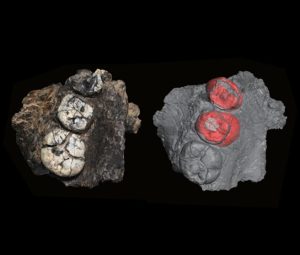
Publication Comptes Rendus Palevol

Références
Mielgo, C., Huguet, R., Moclán, A., Martín-Perea, D. M., Laplana, C., Márquez, B., … & Baquedano, E. (2025). Mixed sites: assessing carnivore, Neanderthal, and abiotic agency at Buena Pinta Cave (Pinilla del Valle, Madrid, Spain). Archaeological and Anthropological Sciences, 17(5), 101.
hal-05079171DOI: 10.1007/s12520-025-02214-6
Mixed sites: assessing carnivore, Neanderthal, and abiotic agency at Buena Pinta Cave (Pinilla del Valle, Madrid, Spain)
Understanding taphonomic processes is essential for reconstructing past environmental dynamics and interpreting mixed sites, where successive occupations by different biological agents have occurred and, in many cases, have been modified by post-depositional processes.
Such is the case in the western part of Buena Pinta Cave (Pinilla del Valle, Madrid). In this study, three Units with different taphonomic histories were analysed. Unit 32 A contains fossil remains that were incorporated by low-energy water currents during the cave’s opening. Unit 23 shows an accumulation of bone remains that were resedimented and reworked by a high-energy current, which illustrates how post-depositional processes can create an assemblage with asynchronous taphocoenoses embedded in the same geological event.
Finally, Unit 2/3 contains a bone assemblage that was primarily produced by hyenas, although it may also have been used sporadically by Neanderthals and other small carnivores.
These findings provide a reference for comparison and evaluation of other archaeo-palaeontological sites with similar problems in caves and mixed sites.
8-10 mars 2027
7ème Conférence virtuelle pour les jeunes chercheuses archéologues et paléontologues

17 octobre 2026
Visites insolites du CNRS à Palevoprim

10-11 octobre 2026
Palevoprim vous invite à l'Hôtel de ville, Poitiers
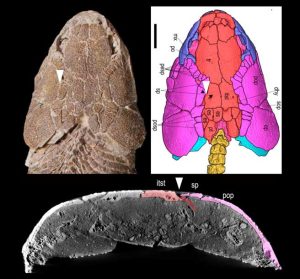
Octobre 2026
Publication Scientific Reports
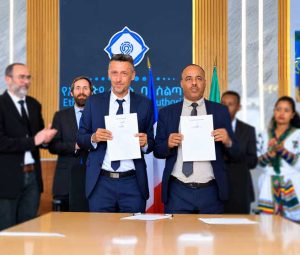
29-30 septembre 2026
Colloque international à Addis-Abeba & création de l'IRL PALÆTHIOPS