Colloque International à Addis-Abeba

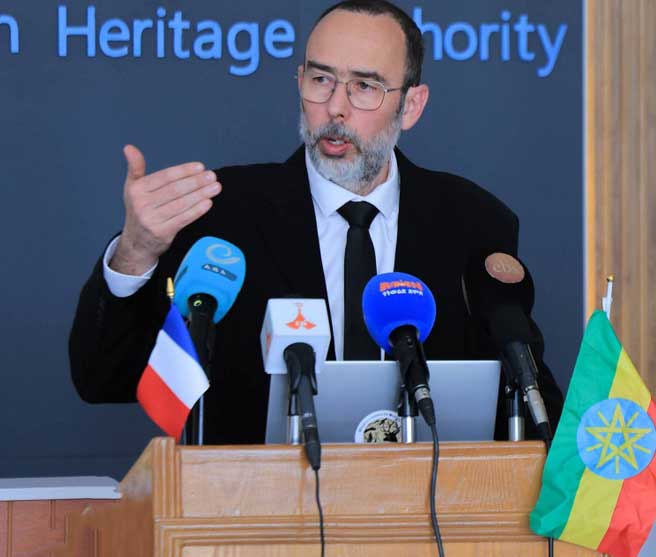
Le directeur de PALEVOPRIM, Gildas Merceron, était présent à Addis-Abeba afin de participer à un colloque international intitulé “Investigating Paleoecosystems & Prehistoric Cultures in Ethiopia”.

Ce colloque marque la création par le CNRS et l’Ethiopian Heritage Authority (EHA) du premier laboratoire de recherche international (IRL) en Afrique orientale, PALÆTHIOPS, dont PALEVOPRIM sera un partenaire majeur notamment au travers de son implication forte dans le projet OGRE (Omo Group Research Expedition).

Création de l'IRL PALÆTHIOPS

L’IRL PALÆTHIOPS, dirigé par Jean-Renaud Boisserie (CNRS Ecologie & Environnement) et Tomas Bedane Getachew (EHA), est dédié à l’étude de l’évolution des paléoécosystèmes du Plio-Quaternaire de la basse vallée de l’Omo en comparaison avec d’autres sites en Afrique.

Il s’intéresse notamment aux stratégies de subsistances des représentants du rameau humain du Pliocène à l’Holocène, à l’évolution des mégaherbivores et à l’histoire biogéographique de tous ces organismes.

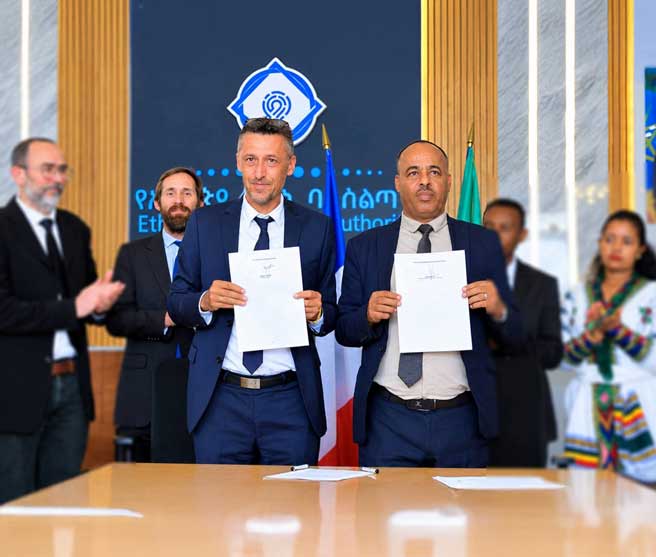
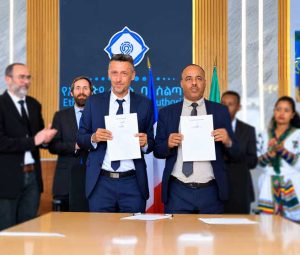
Création de l’IRL par le CNRS et l’Ethiopian Heritage Autority – De Gauche à droite :

  • J.-R. Boisserie (directeur de PALÆTHIOPS),
  • Julien Voituriez (1er conseiller de l’Ambassade de France en Ethiopie),
  • Benoît Hazard (directeur du bureau du CNRS pour l’Afrique orientale),
  • Eliyas Shikur (directeur adjoint de l’EHA),
  • Tomas Getachew Bedane (directeur adjoint de PALÆTHIOPS),
  • Etagegnehu Asres (directrice du Département des Recherches Patrimoniales de l’EHA).

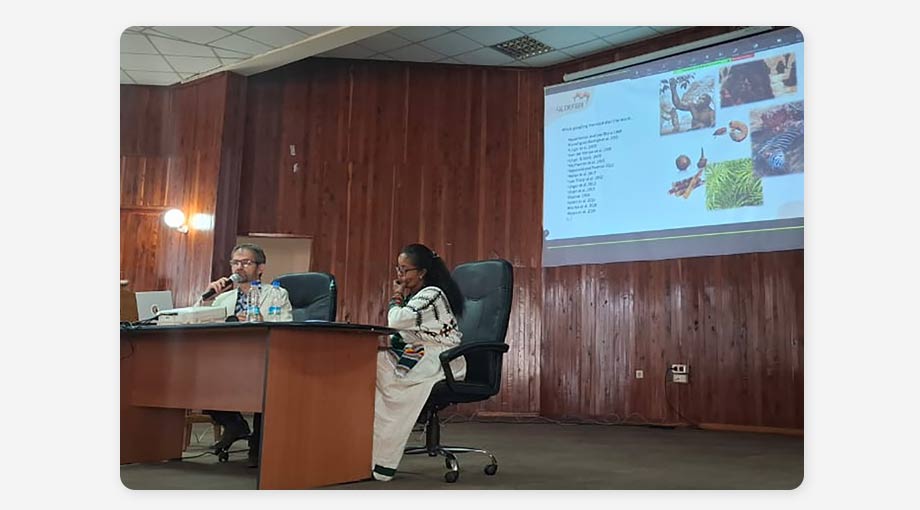
Guillaume Daver & Gildas Merceron (Palevoprim) ont participé au colloque international PALÆTHIOPS avec deux présentations :

New postcranial remains from the Shungura Formation (Lower Omo Valley, Ethiopia) suggest divergent locomotor trends between Paranthropus boisei and early Homo

  • Since the OGRE resumed fieldwork in 2006 in the Omo, 16 additional hominin postcranial specimens have been recovered from the Shungura Formation, bringing the total to 30. Our analyses of the foot, forearm and hand (locality OMO 323), shoulder, ribcage, and cervical skeleton (OMO VE 3) reveal strong locomotor diversity between 2.3 and 1.8 Ma, including evidence for retained climbing and suspensory behaviors in australopiths and reduced locomotor constraints on the forelimb in Homo erectus.

New postcranial remains from the Shungura Formation (Lower Omo Valley, Ethiopia) suggest divergent locomotor trends between Paranthropus boisei and early Homo

  • The African fossil record of primates is rich. Although numerous cercopithecid and hominid fossils are found in close association, these taxa did not necessarily share the same habitats. By combining dietary proxies capturing different aspects of feeding behavior, we aim to assess species’ dietary niche breadth, ecological overlap, and how these patterns were affected by regional climate variations.

8-10 mars 2027

7ème Conférence virtuelle pour les jeunes chercheuses archéologues et paléontologues
Défiler vers le haut