Publication American Journal of Biological Anthropology

Intervenante
Axelle Walker
Postdoctorante, Centro Nacional de Investigación sobre la Evolución Humana (CENIEH), Burgos, Spain
From Teeth to Fossil Primates: Morphology, Variation, and Evolution
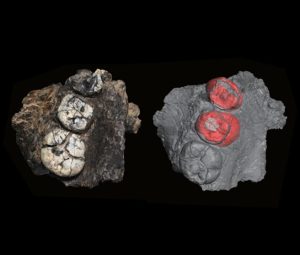
My research has long focused, and continues to focus, on dental morphology in paleoanthropology and primate evolution, particularly in relation to the functional significance of tooth shape and its links to dietary adaptations. Because teeth are often the best-preserved elements in the fossil record, they provide valuable insights into taxonomy, ecology, biological variation, and evolutionary history.
Within the ERC project Tied2Teeth, however, dental morphology is approached from a broader and more integrative perspective combining paleoanthropology, developmental biology, and genetics. Rather than treating teeth as isolated anatomical structures, the project explores how pleiotropy, whereby a single gene influences multiple anatomical traits, may help reveal broader patterns of craniofacial evolution and primate diversity.
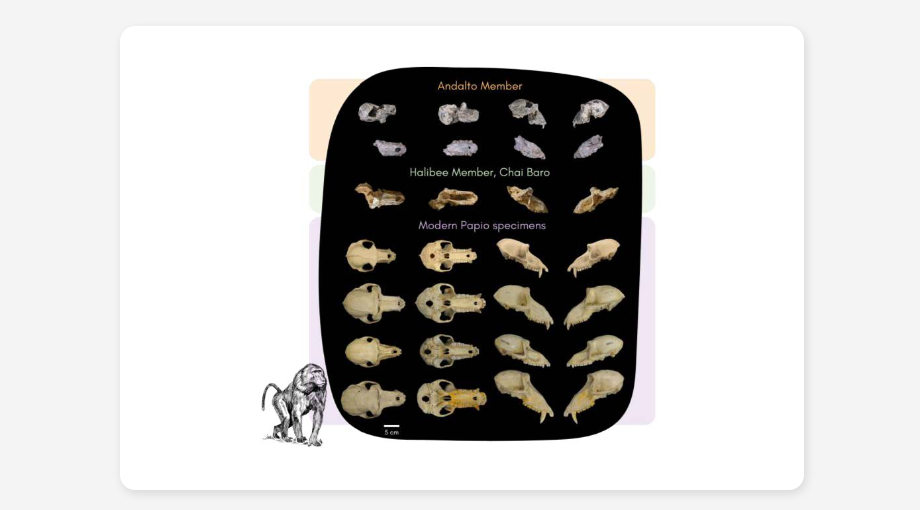
As part of my postdoctoral research, I focus on the relationships between dental and cranial morphology through time using fossil cercopithecoids as a model system. The work presented here primarily concerns the Middle Awash fossil assemblages (Ethiopia), with a particular emphasis on papionins from the Pleistocene deposits of Chai Baro and the older levels of the Andalto Member. These assemblages provide a valuable framework for investigating morphological variation, evolutionary continuity, and faunal dynamics among East African baboons throughout the Pleistocene.
In parallel, my research also contributes to the second axis of the Tied2Teeth project through the use of the Dental Morphological Database (DeMoDa), a large database dedicated to human dental variation. This work first addresses methodological aspects related to coding systems, character selection, and dataset structure in order to better understand how these factors influence interpretations of biological variation and affinities among human populations, before subsequently addressing questions more directly related to evolutionary dynamics. Together, these approaches contribute to a broader understanding of dental morphology and the patterns of variation observed in fossil and extant primates.
Lieu
- Salle 410, bât. B35 (3ème étage, aile nord), université de Poitiers.
Août 2026
Publication Journal of Human Evolution
18 juillet 2026
Article de presse Midi Libre sur la conférence à Villeveyrac
21-22 Juillet 2026
2ème Colloque de paléoanthropologie au Tchad
Juillet 2026
Publication Palaeoworld
Juillet 2026
Offre de thèse Palevoprim & Université de Wits