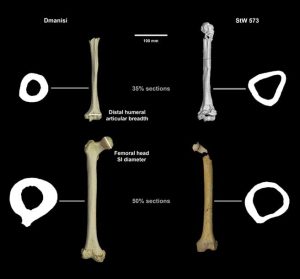
Fig. 1. Femoral, humeral, and tibial diaphyseal
sections and articular dimensions
used in analyses.

Références

Carlson, K. J., Ruff, C. B., Burgess, M. L., Sylvester, A. D., Jashashvili, T., Heaton, J. L., … & Clarke, R. J. (2026). Proportional limb strengths signal an adaptive shift in arboreality in early human evolution. Science Advances, 12(38), eaeh1752.

DOI: 10.1126/sciadv.aeh1752

Proportional limb strengths signal an adaptive shift in arboreality in early human evolution

How much arboreality characterized the Australopithecus locomotor repertoire and how this differed from early Homo are vigorously debated.

Most previous studies rely on traits of uncertain functional significance or are constrained by sampling concerns. Bone shaft strength is plastic and reflects in vivo mechanical loading. Because interlimb bone strength proportions among living apes correlate with arboreality, they are ideal contributors to this debate. We present the most comprehensive analysis yet of relative limb shaft strengths in Australopithecus and early Homo by adding two individuals [StW 573, ∼3.67 million years ago (Ma); and D3901/D4167/D4507, ∼1.77 to 1.81 Ma].

We show that Australopithecus individuals of varying body sizes spanning at least 0.5 Ma exhibit African ape–like interlimb strength proportions, indicating frequent arboreal behavior, and that the Australopithecus lower limb exhibits human-like intralimb strength proportions.

In contrast, early Homo individuals are human-like in both strength proportions, reflecting fundamentally different selective pressures favoring terrestrial bipedalism and an unambiguous departure from arboreality by ∼1.8 Ma.

Retour en haut