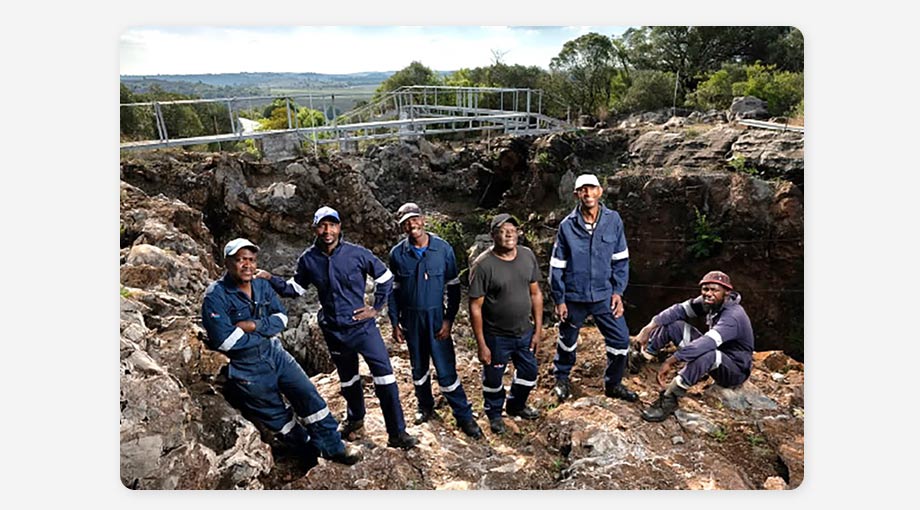
Fig. 5 - Six of the more recent technicians:
(from left to right) Lucas Sekowe,
Itumeleng Molefe, Sipho Makhele,
Andrew Phaswana, Abel Molepolle
and Clopus Seshoene.
(credit: Brett Eloff; consent for publication
has been obtained from all living persons
shown in the photograph).
References

Clarke, R. J., Kuman, K., Pickering, T. R., Heaton, J., Caruana, M. V., Beaudet, A., … & Stratford, D. (2026). Tribute to Abel Molepolle and the central role of the Sterkfontein Caves technicians in international palaeoanthropological research. South African Journal of Science, 122(3-4), 1-5.
https://doi.org/10.17159/sajs.2026/25052

Tribute to Abel Molepolle and the central role of the Sterkfontein Caves technicians in international palaeoanthropological research

Significance:

We present this article on the occasion of the retirement of Abel Molepolle, a Sterkfontein senior technician who is a lifelong link between the past and present of palaeoanthropological research at Sterkfontein Caves (South Africa). Along with other team members of this internationally important fossil site, he has played an essential role in advancing humanity’s understanding of our evolution. This article highlights the part played by Molepolle and other South African technicians dating back to the 1936 inception of the work at these key heritage sites.

Sterkfontein’s technicians

December 2026 will mark the 60th anniversary of the continuous excavation project at Sterkfontein. During these six decades, a wealth of fossil bones of Australopithecus and their contemporaneous fauna, as well as some early Homo and Paranthropus fossils and thousands of Oldowan and early Acheulean artifacts, have been recovered. These finds, along with insights into stratigraphy, dating, taphonomy and palaeoenvironments, have formed the subject matter of countless theses, conference presentations, academic publications, popular documentaries and articles, and other outreach activities, such as special site tours and workshops for teacher training. Such developments began not only with the first research efforts at the site, conducted from 1936 by the renowned palaeontologist Robert Broom and later by John Robinson, but they also resulted from the vision, planning and long-term management of the site by Phillip Tobias and chief technician Alun Hughes from the University of the Witwatersrand Medical School (see Figure 1). The importance of this South African heritage site has attracted visitors, both national and international, from all walks of life.

The indispensable contribution of African palaeontological technicians was highlighted 75 years ago by Broom in his book, Finding the Missing Link.1 In his account of the 1947 discovery of the well-preserved Australopithecus africanus cranium ‘Mrs Ples,’ he devoted a full page to praise the zoological ability of his assistant, Daniel Mosehle, saying he had been with the Transvaal Museum (Pretoria) for about 20 years and “as a fossil hunter he is worth his weight in gold”1(p.65).

Broom also highlighted Mosehle’s ability to identify fossils to correct skeletal element and taxon. Mosehle, spelled as Mosethla) is depicted by Robinson, who described him as a “wise and reliable man”2(Plate IIIA). In a photo from 1957, he shows him with Absolom Lebelo and Reuben Molalaote, stating that the three of them, together with him, comprised the excavation team, and that he gratefully acknowledged their help.

March 8-10 2027

7th Virtual Conference for Women Archaeologists and Paleontologists

Scroll to Top