Publication Scientific Reports

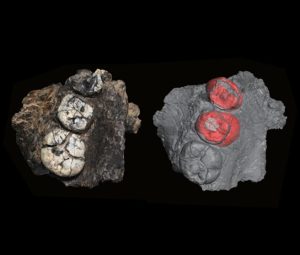
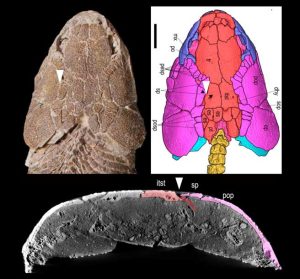
of K. aurorae gen. et sp. nov. (GU/RJ/07).
Références
Waqas, M., Weppe, R., Lazzari, V., Blondel, C., Marivaux, L., Charruault, A. L., … & Orliac, M. (2026). A basal representative of Cetacea from the Eocene of India. Nature Ecology & Evolution, 1-9.
https://doi.org/10.1038/s41559-026-03055-9
A basal representative of Cetacea from the Eocene of India
The land-to-water transition of cetacean mammals is a case study illustrating morphological transformation over time. The earliest cetaceans, still able to walk on land, document spectacular transitional states of their skull and body, allowing a step-by-step reconstruction of their adaptations to the aquatic environment.
However, their highly derived carnivorous teeth appear abruptly in the fossil record and the earliest evolutionary history of their dentition remain poorly understood. Here we describe the most basal representative of Cetacea, Kalakocetus aurorae gen. et sp. nov., from the Eocene of India. Its unprecedented dental morphology bridges the gap between the shearing molars of early carnivorous cetaceans and the crushing molars of their closest terrestrial relatives. Functional analyses point to a carnivorous diet implying shearing movement of the jaw and a loss of crushing function of the third molar.
The intermediate morphology of K. aurorae gen. et sp. nov. provides the missing element critical to the understanding of the emergence of the carnivorous dental pattern of cetaceans.
Its basal position in the cetacean tree sheds new light on cetacean origins and dental evolution.
Octobre 2026
Publication Comptes Rendus Palevol

8-10 mars 2027
7ème Conférence virtuelle pour les jeunes chercheuses archéologues et paléontologues

17 octobre 2026
Visites insolites du CNRS à Palevoprim

10-11 octobre 2026
Palevoprim vous invite à l'Hôtel de ville, Poitiers
Octobre 2026
Publication Scientific Reports